
What next for patient voice? Learning from the Healthwatch model
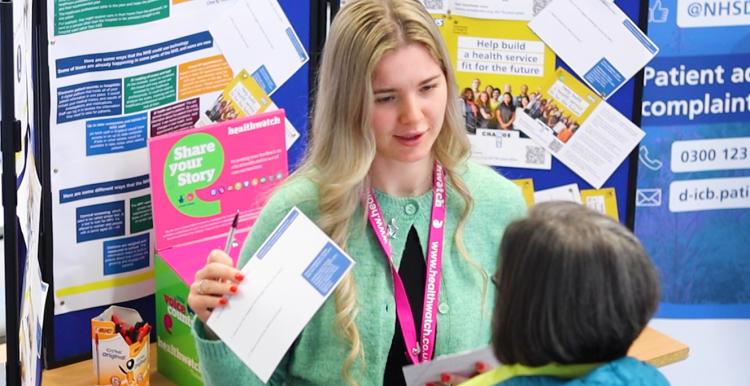
A new national report from the The King’s Fund highlights both the strengths and limitations of the Healthwatch model, as the health and care system prepares for significant change.
The report explores what has worked over the past decade, what challenges remain, and what must be protected as plans progress to close Healthwatch and transfer its functions elsewhere.
Since 2013, Healthwatch has played a key role in gathering people’s experiences of health and social care and using this insight to influence change.
However, following a government announcement in June 2025, there are plans to close both Healthwatch England and the network of 153 local Healthwatch organisations. Their functions are expected to transfer to NHS integrated care boards (ICBs), local authorities and the Department of Health and Social Care.
This creates an important moment to reflect on what should be retained – and what needs to improve.
What worked well
The report and supporting commentary highlight four key strengths of the Healthwatch model:
Independence and trust
Healthwatch has been seen as a credible, impartial voice because it operates independently from the NHS and central government. This has helped build trust with communities and enabled it to raise difficult or overlooked issues.
Strong local relationships
Local Healthwatch teams have built long-standing relationships with communities, including people who are often less likely to be heard. This has supported meaningful engagement and insight gathering.
Local insight with national influence
The “hub and spoke” model allowed local experiences to inform national policy conversations, helping to raise issues such as access to dentistry, GP services and NHS administration.
Rich and varied insight
Healthwatch has gathered large volumes of both qualitative and quantitative feedback – including unsolicited insight that is not always captured through formal NHS channels.
Where there were challenges
The report also identifies important limitations:
Limited power to drive change
Healthwatch has been able to highlight issues, but has not had the authority to ensure action is taken, meaning some findings have not led to improvement.
Funding and variation
Budgets have reduced over time, with significant variation between local areas. This has affected capacity and consistency across the network.
Changing system structures
The move to larger integrated care systems has made it harder for smaller local organisations to influence decision-making at scale.
Complex commissioning arrangements
Local authority commissioning has created challenges, particularly around independence in relation to social care.
What needs to happen next
Both the report and the accompanying commentary are clear that any future model must build on what has worked, not lose it.
Four key priorities are identified:
- Maintain independence – so people feel safe sharing their experiences and organisations can speak openly
- Retain strong community insight – including reaching seldom-heard groups and tackling inequalities
- Keep a local-to-national structure – ensuring local voices can influence wider system decisions
- Strengthen the link between insight and action – so feedback leads to real improvements
There is also a clear warning that removing Healthwatch without a robust alternative risks losing valuable expertise, relationships and learning built over more than a decade.
A critical moment for patient voice
The report concludes that this is not just a structural change – it is a decision about the future role of patient and public voice in health and care.
Any new approach will need to ensure that people’s experiences remain central to how services are designed, delivered and improved.
As the system evolves, the challenge will be to strengthen – not weaken – the ability to listen, understand and act on what matters most to patients, service users and communities.