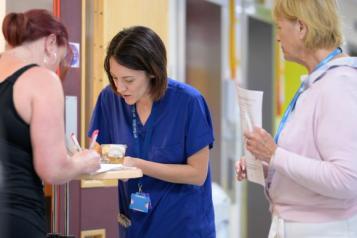
Health Bill debate raises questions about the future of Healthwatch

The Bill proposes a number of significant changes to the NHS, including the abolition of NHS England, the creation of a single patient record, and changes to how patient voice and public feedback are gathered and used.
As part of the Bill, the Government is also proposing to abolish Healthwatch England and current Local Healthwatch arrangements.
Healthwatch in Devon, Plymouth and Torbay remains open, independent and fully operational. People can still contact us to share their experiences of health and social care, raise concerns, or access free and confidential advice and information.
What was discussed?
During the debate, several MPs raised concerns about the proposed changes to Healthwatch.
MPs questioned how independent patient voice would be protected if Healthwatch functions move into the Department of Health and Social Care, Integrated Care Boards and local authorities. Concerns were also raised about local accountability, scrutiny, health inequalities, and whether people would still have a trusted independent route to share concerns about services.
Steve Darling MP for Torbay specifically referenced local Healthwatch work in Devon and Torbay. He highlighted a previous domiciliary care case where evidence gathered by Healthwatch helped identify serious failures in support for vulnerable people, leading to investigation, contract changes and improved support.
Martin Wrigley MP for Newton Abbot also spoke in support of Healthwatch. He described Healthwatch as a patient advocate rather than a regulator, and said it provides an important independent check outside the health and care system itself.
More widely, MPs asked what would happen to Healthwatch’s research, insight and enter-and-view functions, which currently help gather evidence from people using services and share that feedback with decision makers.
What was the Government’s response?
The Government said its aim is to bring patient voice closer to those planning and delivering services, through the Department of Health and Social Care, Integrated Care Boards and local authorities.
Ministers did not change the Government’s position during the debate. However, they acknowledged that independence, and the perception of independence, are important issues and said these would be explored further as the Bill moves through Parliament.
Amendments have also been tabled by MPs seeking to remove the clauses that would abolish Healthwatch England and current Local Healthwatch arrangements.
What does this mean for local people?
At this stage, the Bill has not become law and there are no immediate changes to local Healthwatch services.
Healthwatch in Devon, Plymouth and Torbay remains here to:
- listen to people’s experiences of NHS and social care services
- provide free, confidential advice and information
- raise issues with services and decision makers
- share local evidence to help improve care
- speak up for people whose voices are not always heard
We know that many people value having an independent place to share feedback, especially when they do not feel heard by services directly.
What happens next?
The Bill will now continue through Parliament, where MPs will consider the detail and any proposed amendments.
We will continue to monitor developments closely and will keep local people, partners and stakeholders updated as the Bill progresses.
In the meantime, our message is clear: Healthwatch in Devon, Plymouth and Torbay remains open, independent and here to help.