Future of Torbay Hospital: Healthwatch puts local questions to Trust Chief Executive
The conversation reflects questions and concerns Healthwatch has heard from local people – including the future of Torbay Hospital, cardiology and pathology services, neighbourhood health, integrated health and social care, who makes decisions about services and how people can have their say.
Watch the full interview above or by clicking here
Challenges and opportunities ahead
Joe described rising demand, financial pressures, an ageing population and older NHS buildings as some of the biggest challenges locally. He also highlighted the Trust's workforce, research, investment in services and the development of more care closer to people's homes as opportunities for the future.
“We start from a really strong position in that we have a fantastic workforce here. We have 6,500 people that we employ. Many of those live in the area and receive care in the area, and are immensely committed to the services that we provide.”
The future of Torbay Hospital
Kevin asked directly about concerns over the hospital's future and what role Joe expects it to play in the years ahead.
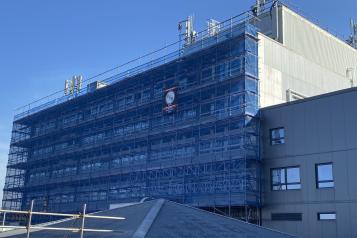
Joe described Torbay Hospital as an important part of the community, serving an acute population of around 300,000 people. He pointed to ongoing investment, redevelopment and work with the New Hospital Programme as evidence of the Trust's longer-term plans.
“We honestly wouldn't be doing that, Kevin, if we didn't think that the hospital was here for the long term to serve the population that we look after, and that's very much our intention.”
Cardiology
On cardiology, Joe said there are currently no proposals to change cardiology services at Torbay Hospital.
He also discussed the previous proposal to test different overnight arrangements for patients needing emergency heart attack treatment, confirming that the trial did not go ahead. He highlighted ongoing investment in Torbay's cardiac catheter laboratories.
“Firstly to say on cardiology there are no proposals to change cardiology services at Torbay Hospital.”
“In the event, that trial was never taken forward.”
“We're very committed to cardiac care here at Torbay Hospital.”
Pathology
Joe stressed that pathology covers several different services and explained the distinction between moving laboratory work and changing where patients receive treatment.
The Trust is looking at relocating cellular pathology laboratory work to Gadeon House in Exeter, while urgent and time-critical testing needed to support patients at Torbay Hospital would continue locally. Further opportunities involving microbiology and blood sciences are being explored, but Joe said final business cases had not yet been approved by the Trust Board.
“It's important to say in this that this is about laboratory services and where they're located, not about where patients receive care.”
“Anything that needs to be done quickly to support someone's care will be done here.”
Who makes decisions about NHS services?
The interview also explored the different responsibilities of the Trust and NHS Devon Integrated Care Board.
Joe explained that the Trust can make some decisions about how it provides the services it is commissioned to deliver. More substantial commissioning changes – potentially affecting where people receive care or whether a commissioned service continues – sit with NHS Devon and can require wider public engagement or formal consultation.
“That sits in the remit of the Devon Integrated Care Board, and some changes require elements of engagement and then sometimes bigger changes require much more formal consultation.”
Joe added that the Trust would expect to feed the views of its staff and local communities into those processes, alongside organisations such as Healthwatch.
Neighbourhood health and care closer to home
Joe said the NHS's move towards neighbourhood health is intended to help people stay well, manage long-term conditions and access more support closer to home.
He was also clear that developing community services does not remove the need for hospital care.
“Hospitals will always be needed for that.”
“For us, it's a two pronged attack, really, is to make sure we invest in Torbay Hospital and bring it up to modern healthcare standards... But alongside that, develop our neighborhood model.”
Health and social care integration
Kevin also asked about the Trust's decision to give notice on the Section 75 arrangements with Torbay Council, under which the Trust has delivered adult social care on the council's behalf.
Joe said the decision centred largely on financial and organisational arrangements rather than an intention to move away from integrated care, with work continuing to protect continuity for people using services.
“It really wasn't about stepping away from integration.”
“The fact that we've handed notice in on physically running adult social care on behalf of Torbay Council doesn't mean that integration of services will change, or that residents will necessarily notice any differences in the care that they provide.”
What is currently being proposed?
Towards the end of the conversation, Kevin asked whether there were any particular service proposals currently on the table.
Joe said:
“There are no current proposals at the moment to change any services that are provided in Torbay and South Devon.”
He qualified this by referring again to the pathology work, which he said had not yet received final Board approval, and acknowledged that health services will continue to evolve as science, technology and people's needs change.
Joe said the Trust's commitment was to communicate openly about future changes and involve people as early as possible:
“Our commitment has to be to be very open and transparent with the population that we serve and to be as open as early as we can about anything that's on the horizon.”
The importance of an independent patient voice
The interview finished by discussing the importance of independent patient and public voice and the role of constructive challenge.
Joe said:
“We really welcome the constructive challenge that we get from you, but also the independent patient voice.”
“We are really going to still need to maintain that independent patient voice to make sure that services are designed around the needs of patients, not around what people think that they might need.”
Healthwatch in Devon, Plymouth and Torbay will continue to listen to people's experiences, ask questions on their behalf and share independent feedback with the organisations responsible for planning and delivering local health and care services.