Exploring Reasonable Adjustments in Torbay
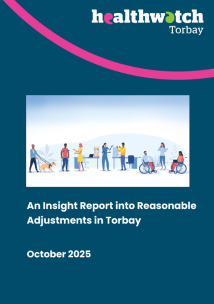
The report focuses on the experiences of people with disabilities, including people with learning disabilities, neurodivergent people and people with mental health conditions. It looks at whether services are meeting their legal duties under the Equality Act 2010 and related NHS guidance.
The report is based on feedback from 70 individuals and groups, supported by case studies and a review of insight from other local Healthwatch organisations across England
DOWNLOAD THE FULL REPORT
Key findings
The report highlights several clear themes:
- Inconsistent use of reasonable adjustments – tools such as hospital passports and digital flags are in place but are not always used or understood
- Small adjustments can have a big impact – quiet spaces, flexible communication and staff continuity make a real difference
- Training matters – staff training in learning disability, autism and neurodiversity improves experiences, but is not consistent
- Communication builds trust – listening and compassionate contact reduces distress, especially during crises
- Transitions are challenging – families described a lack of support when moving from children’s to adult services
- Carers are essential – carers’ knowledge is critical when people cannot fully explain their needs
- Digital systems can exclude – automated and online processes can create barriers for some people
The findings show that people with complex or multiple needs often require more tailored support, not less.
Recommendations
The report calls for services to:
- Review how reasonable adjustments are identified and delivered
- Improve awareness and use of digital flags and hospital passports
- Embed person-centred, consistent practice across services
These recommendations align with NHS guidance and the Devon LeDeR report.
Stakeholder response
Torbay and South Devon NHS Foundation Trust provided a response to the report.
They welcomed the findings and recognised the importance of improving awareness, consistency and communication around reasonable adjustments. They highlighted opportunities for practical improvements, including clearer signposting and addressing sensory overload.
Download the report
The full report, including detailed findings and recommendations, has been shared with system partners to support service improvement.